
I have a thing for pens I don't have to throw away. I previously sang the praises of refillable fountain and ballpoint pens but I think I found something even better: Felt-tip pens you can refill.
I've experimented with two kinds of this style of pen. They're both good so I wanted to tell you about both — but I do have a clear preference for one.
Kuretake Karappo
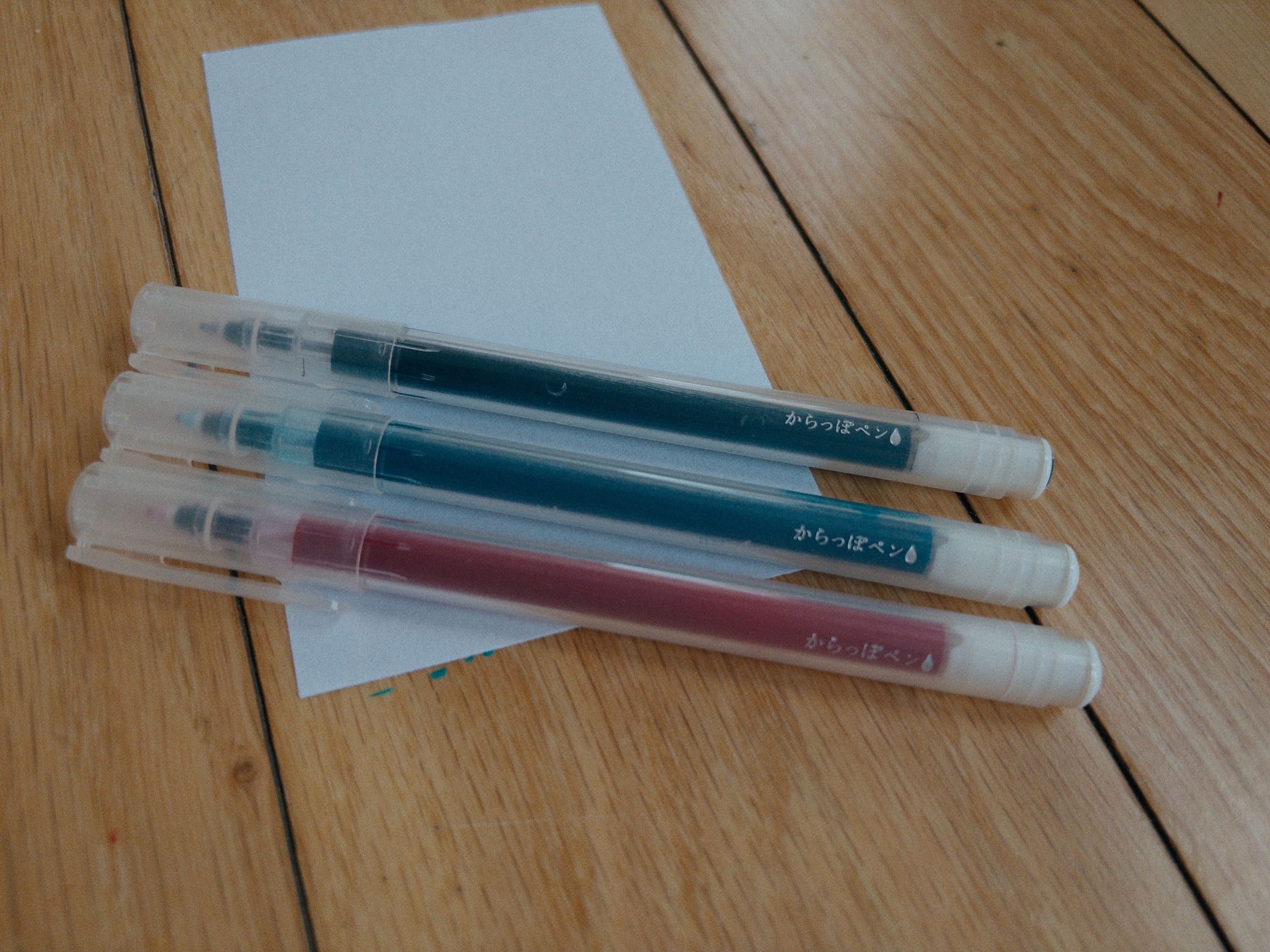
"Karappo" is Japanese for "empty". These are felt-tip markers that have clear barrels, and ship empty. They're affordable: Five of these cost me $18 CAD on Amazon.
You get a bag with five markers and five ink reservoirs. These are just your typical "sponges" or "reservoirs" that come with felt-tip markers, but these ones are brand new and white, waiting for your ink.
I decided to test these with inkjet ink rather than fountain-pen ink, because I wanted to make a set of CMYK markers for pen plotting. I just took a reservoir and dipped it in a bottle of ink like the tip of a wick. Ink then crawled up the reservoir until it was full. This was cool to watch (I tried to take a video for you but it's way too shaky to share).
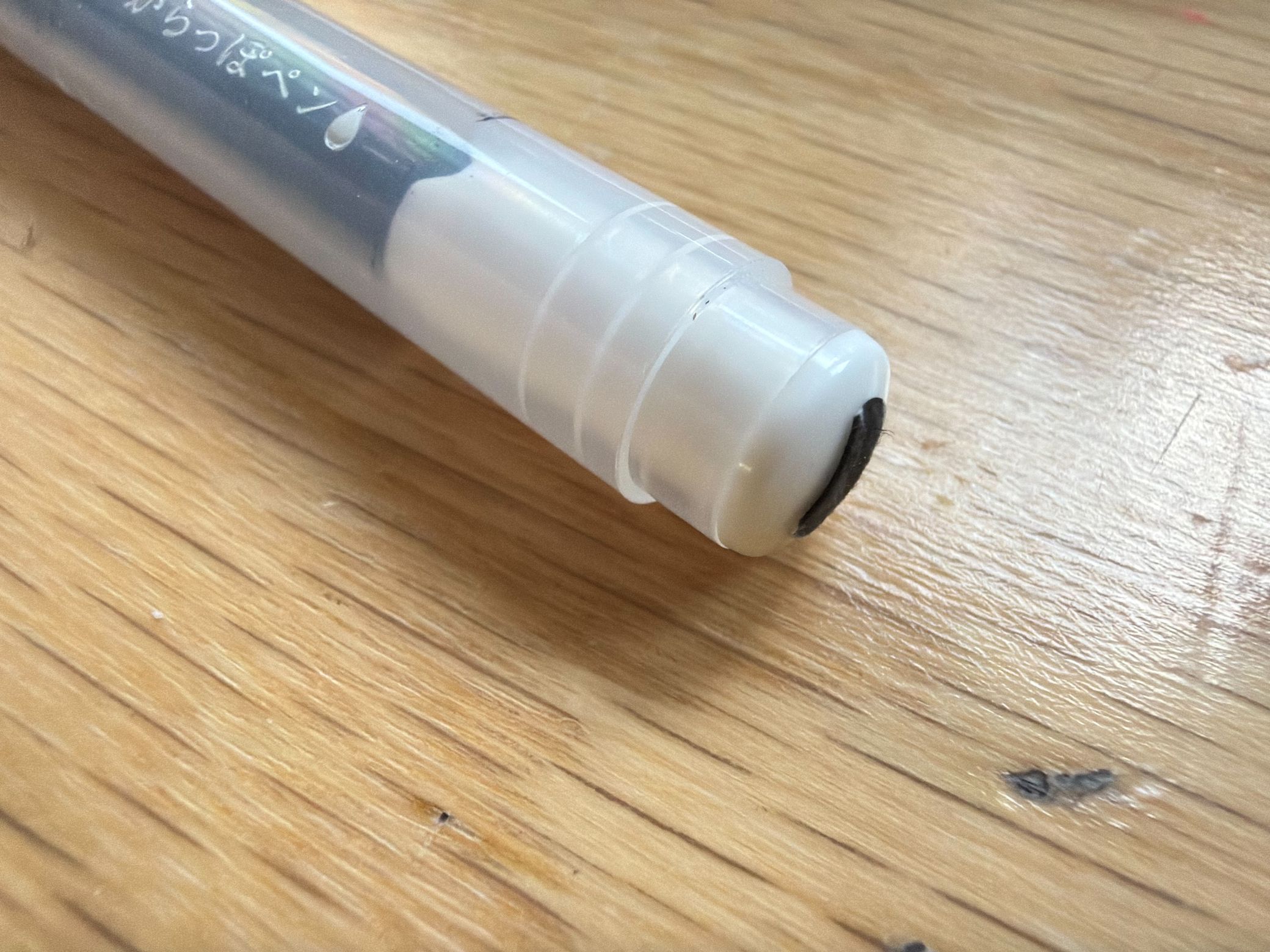
Once full, all you have to do is drop the reservoir into the pen and close the rear cap. Ta-da — you just made your very own custom marker.
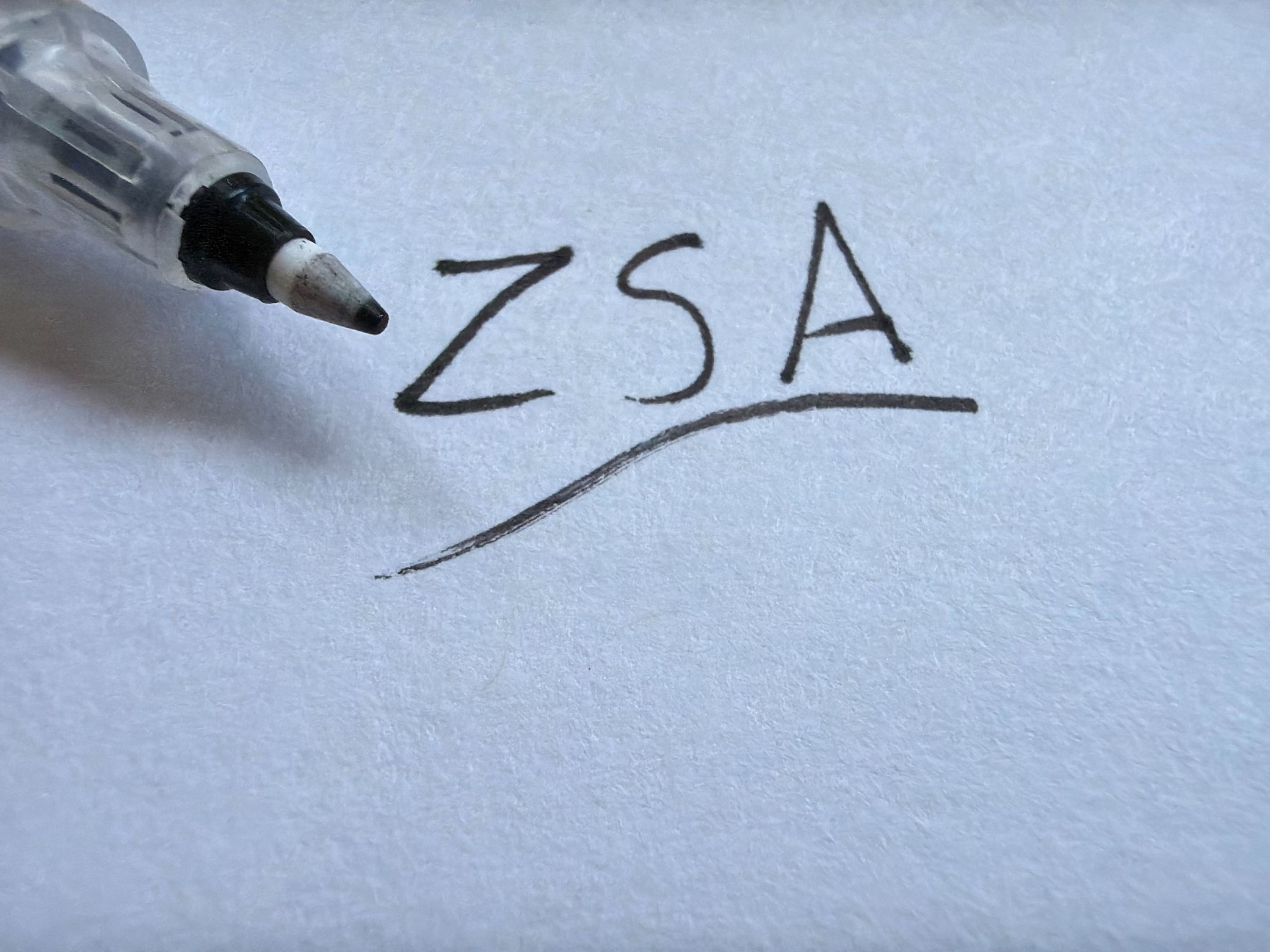
These work very well. The tip is not super-thin but it's just fine for writing. It's nice and sturdy, and feels smooth on the paper. You get to choose your colors and the clear barrel makes it easy to tell what color each marker is.
As an affordable first step, these are great. The only con is that they're not super easy to refill: You need to pry the back cap with a knife. I wish these were designed so that you can more easily open them back up, and I also wish they sold the ink reservoirs on their own. You could call them fillable, but not quite refillable. The nibs can't be replaced, either.
These wishes are what brought me to my second, and much more expensive, exploration into this category.
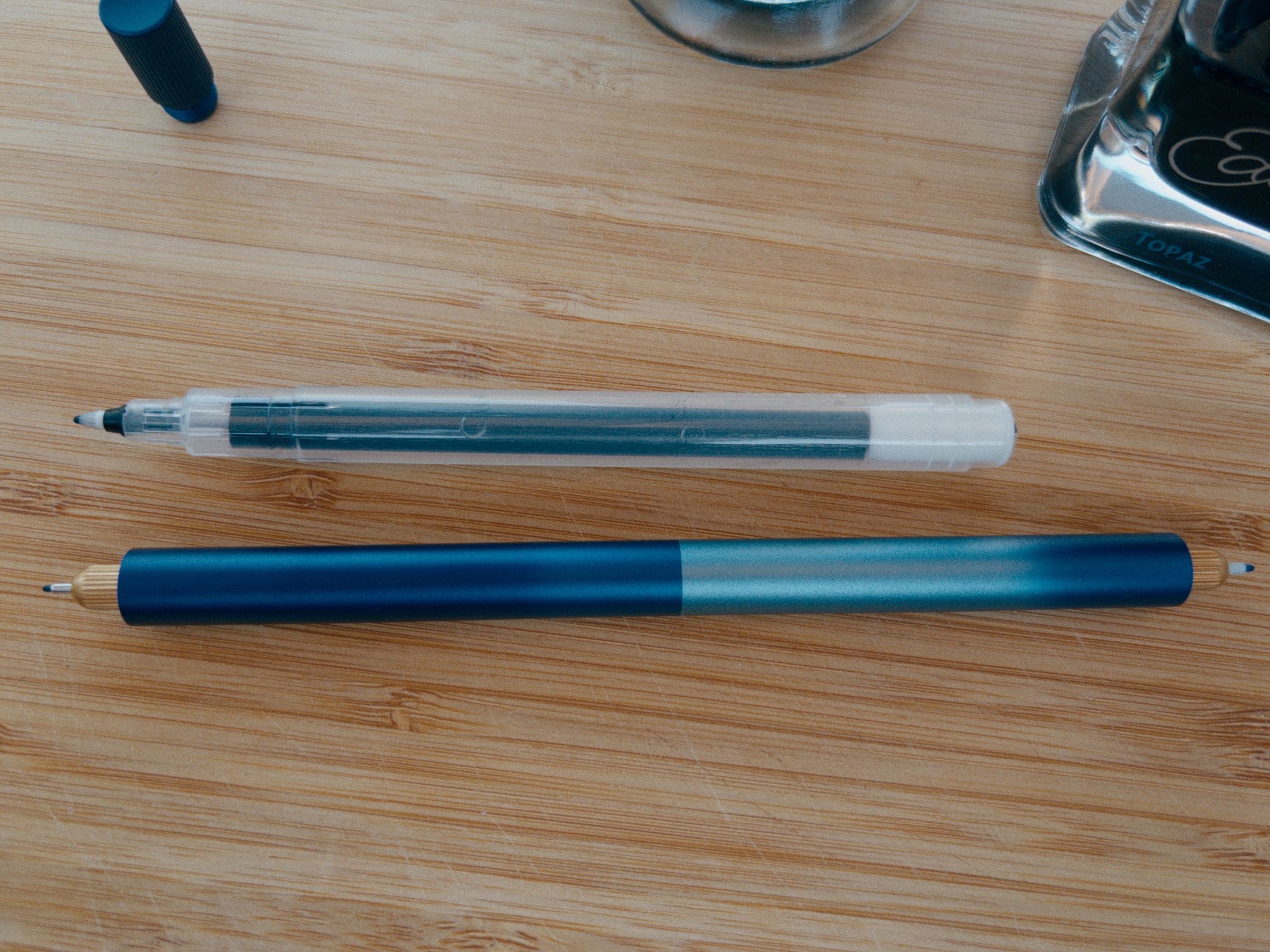
Tom's Studio Lumos Pen
I kept getting lots of ads for this pen on Instagram, which initially made me think it must not be very good. But I did look into it, and realized Tom's Studio was legit when I found out my local indie stationery shop stocks their pens.
I went to visit the shop and came out the door with a brand-new $200 CAD (!) Lumos Pro Duo pen in a Sakura finish. Yes, that is a mouthful, but I'd expect no less for $200.
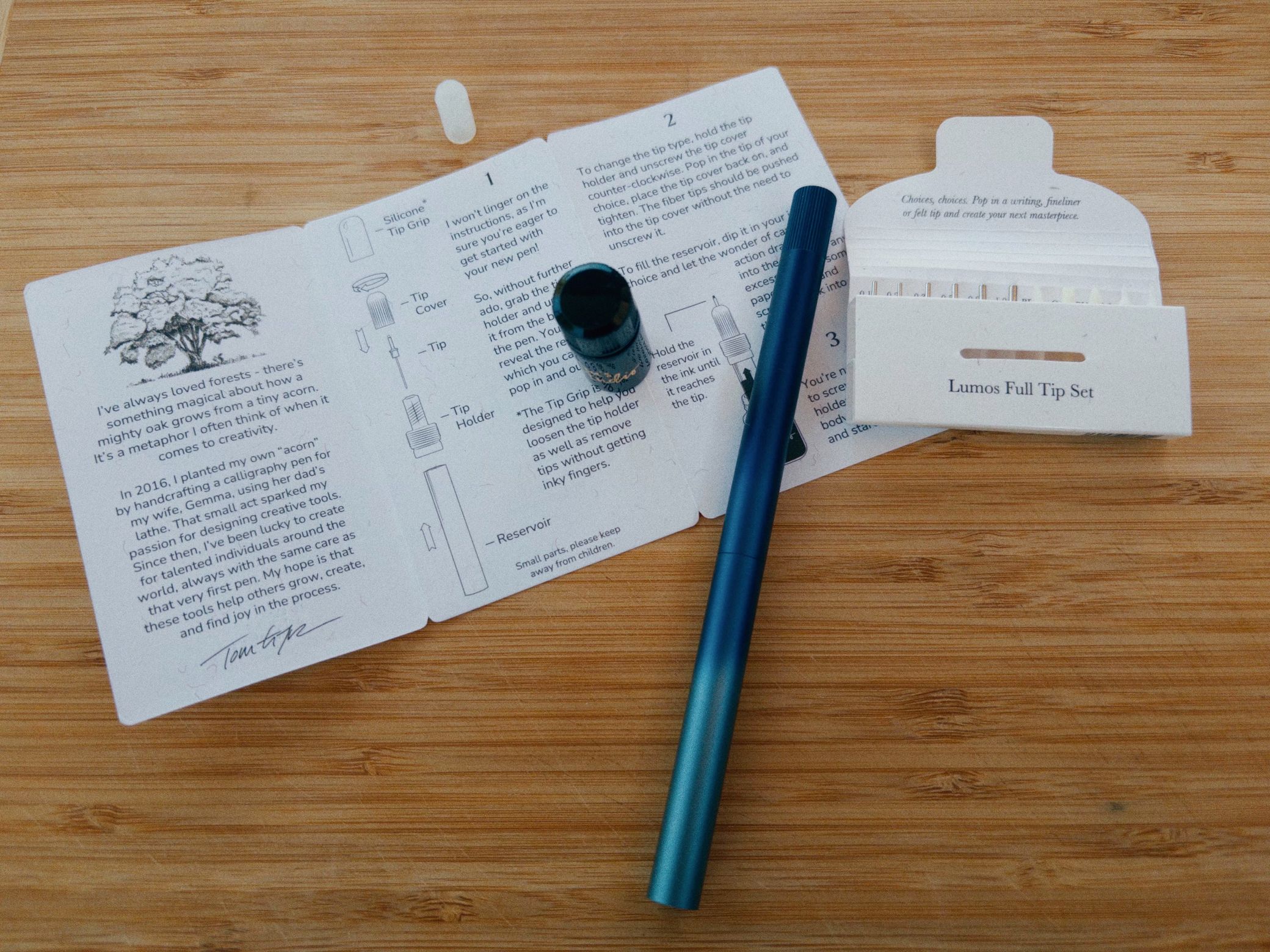
The Duo in the pen name means it has two tips. I would expect a tip at either end, but one of the tips is actually nested into the other. That's a bit unwieldy, because you have to unscrew the pen in half to use it. You end up with two little mini-pens which you can then screw back end-to-end, but then you only have one cap.
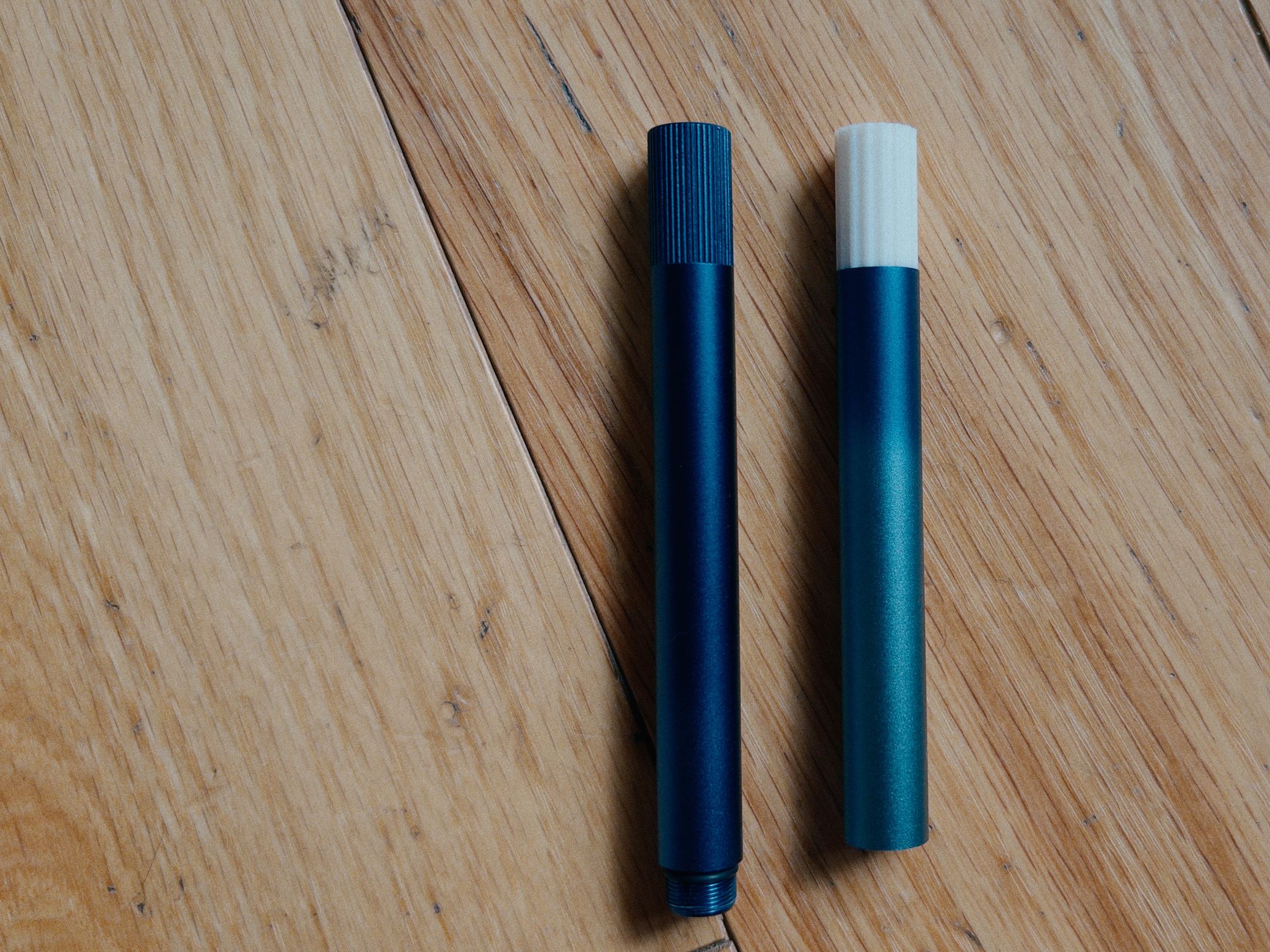
This bugged me enough that I ended up 3D-printing an extra cap so I could use it like a "normal" two-tipped pen, with a tip at either end. It was worth it.
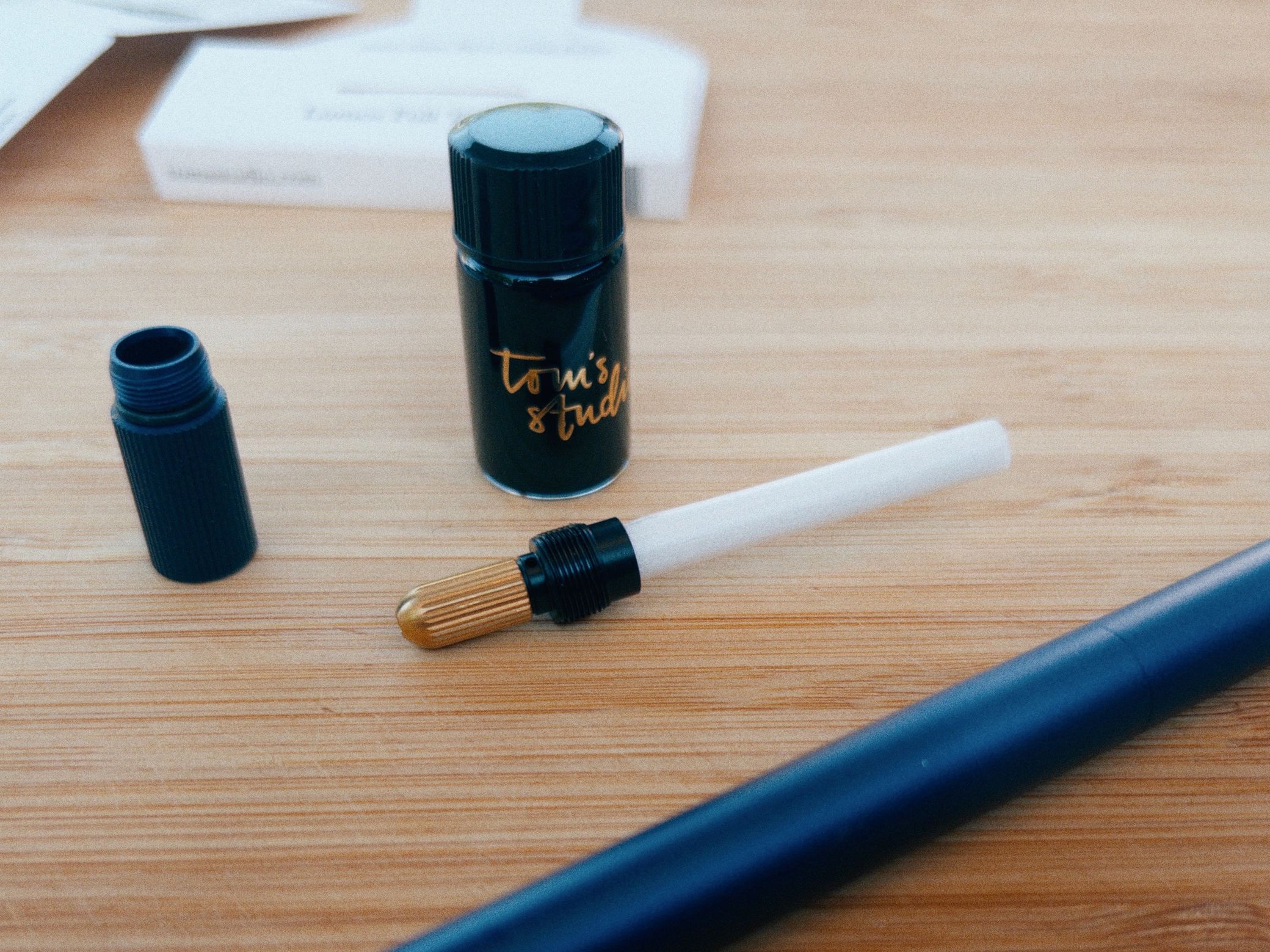
It's an interesting system. You get the pen barrel itself, which is machined aluminum with a lovely color gradient. At the very tip it has a collet, a bit like the chuck of a drill.
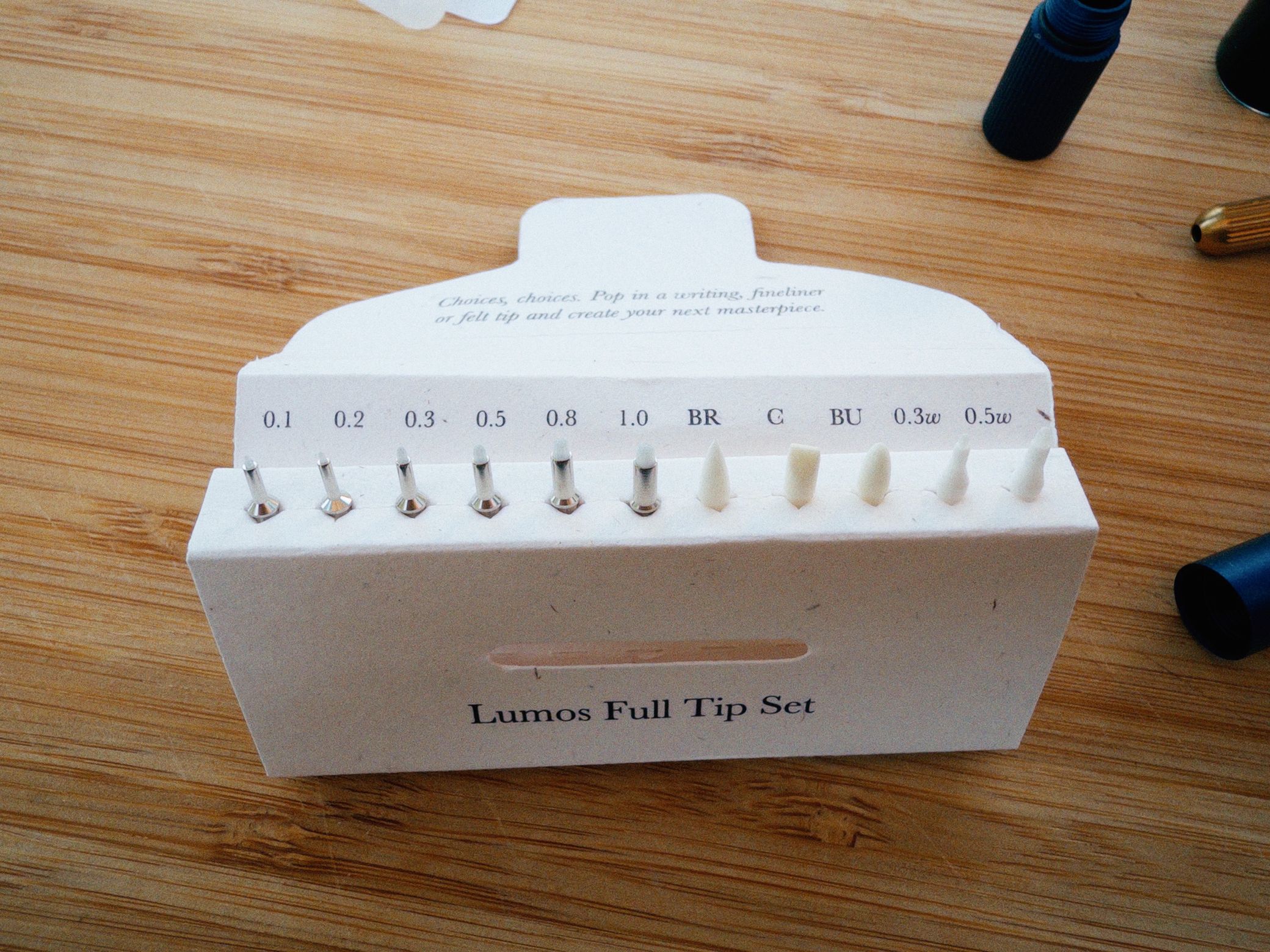
The Lumos comes with a small kit of 11 different tips in all sorts of sizes and shapes, plus two blank reservoirs. I dipped one into black fountain pen ink, and the other into blue fountain pen ink. I then chose two tips that looked good to me, and plugged them into the pen's two collets.
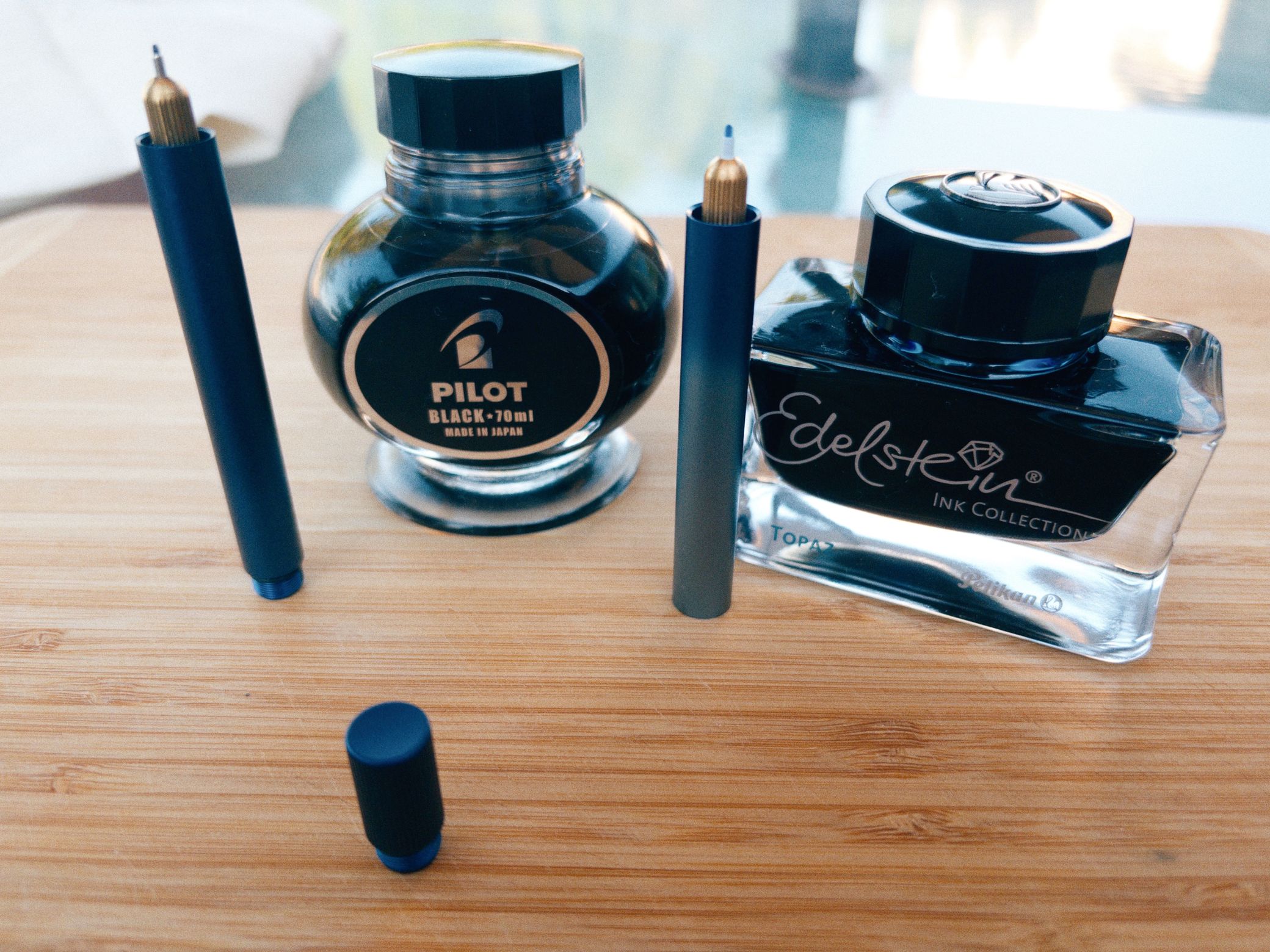
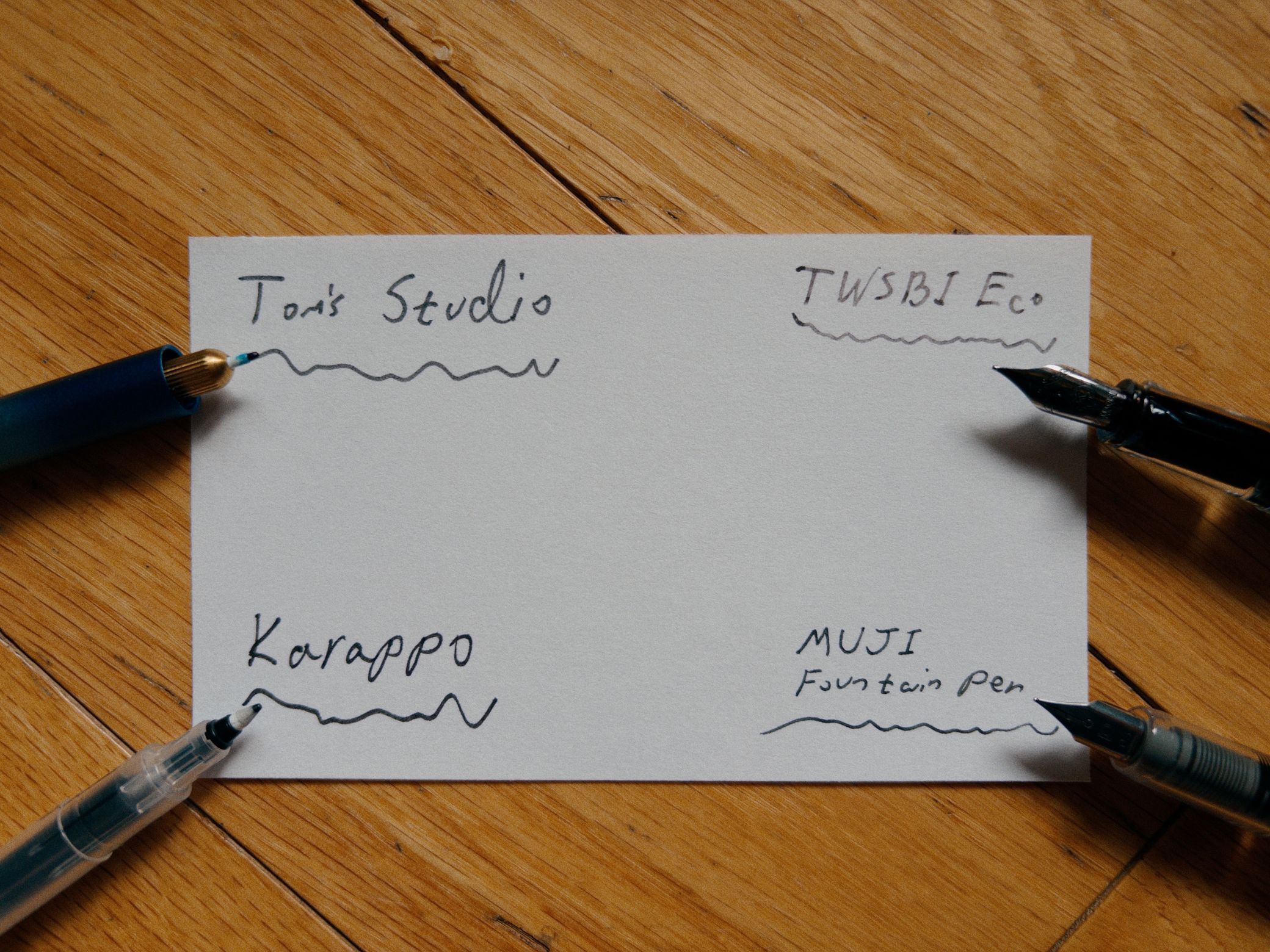
The whole process took maybe five minutes, and I found myself with an excellent pen. It glides over the paper. Most surprisingly, it doesn't smear: The same ink that smears in my fountain pen behaves itself here.
The ink is slightly fainter on the paper because the pen deposits less of it compared to a fountain pen, and I think that must be why it dries faster and doesn't smear. That trade-off is well worth it for me (a leftie quite prone to ink-smearing).
When the ink finally runs dry in the reservoir, you can just dip it again. The people at the store also told me that the pen tip can be rinsed and dried for switching to a different color, but I did not try that myself.
Finally, another notable feature of Tom's business model is that the pen barrels are expensive, but the tips and the reservoirs are not. A set of 11 tips is $30 CAD in my local shop, and five large reservoirs (which can be cut in half) are $5.25. All you need in order to make a much cheaper DIY version is a barrel and a tip that are the right size. If you have a 3D printer, it's quite easy and fun to design these.
The Surprise
I was surprised to get a product that was hyped in an Instagram ad and find out it's actually good. This is a pen I would be happy to get or give as a gift.
Not smearing is a huge feature and they should talk about it more (speaking of Instagram ads).
Yet another surprise came when I realized that "generic fineliner tips" are not a thing. If you want to DIY similar pens, it looks like you really do need to get Tom's brand reservoirs and tips. I'm not sure why nobody makes generic versions but I've looked all over the place.
A bottle of black printer or fountain pen ink and a Tom's Studio pen can last a decade of daily writing. If the reservoir dries out, refill it. If a tip wears out, replace it. How cool is that?