
Rucking is a trendy word that just means walking with a heavy backpack. On its face, it seems like the fitness industry glommed onto some fairly mundane activity, slapped a word on it, and now it's a thing. The power of branding. The word originally came from the U.S. Army, making it appear even cooler to some.
Well, branding or not, I'm here to tell you it's pretty great.
I started rucking on January 17, 2025. In the year since I went on about 100 rucks, each around 6km in length. So that's around 600km (370 miles) of walking with 14kg (30 lbs) on my back in all sorts of weather. I have some opinions, and some hard-won gear choices I'd like to share.
The activity
Before we get to the gear part, I want to tell you a bit about what rucking feels like, to me.
First of all, it's gentle. When I go for a jog, even if I start slow, it's still a bit of an abrupt transition. But with rucking I'm just walking. Even if I set out to walk fast, I'm still just walking, and it's easy to ramp up gradually.
Once I get going, it does bring my heart rate up. It's easy for me to get to Zone 2 cardio and stay there. I usually come back drenched from an hour-long walk — it definitely builds up both tolerance and muscle mass.
Walking is a foundational activity, as is carrying weight. I'm getting to the age when some people start complaining about their body creaking here and there, and the back and knees are some of the first areas of concern. Walking with weight helps me keep both my back and my knees happy. It's a great form of functional fitness; I can feel how my gains from rucking transfer over to daily activities like carrying groceries.
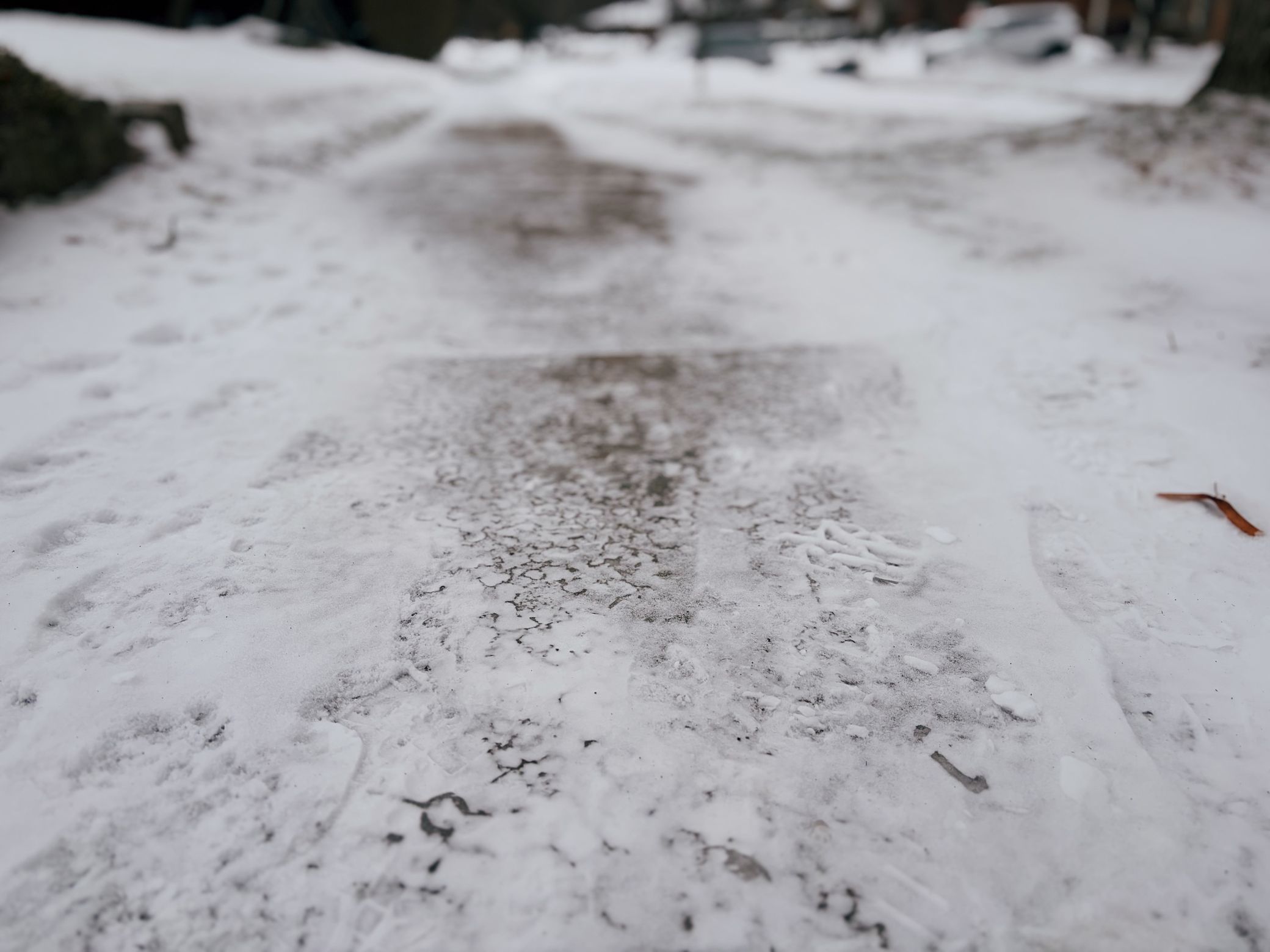
The next thing I like about rucking is that I can easily do it in the winter. I don't really like to jog in the winter; I used to do it, but was always concerned about slipping on some ice (this actually happened a couple of times and was not fun). But when I go for a walk, I can bundle up, put on a pair of shoes with some spikes, and feel totally secure even if the sidewalk is icy.
Another advantage is that it's easy to walk with a friend. I tried jogging with a friend but it never really worked for me. It was a bit too strenuous for chatting, and it wasn't easy to jog at the same speed. With rucking, I can be carrying a heavy load and having quite a challenging workout while walking right alongside someone who's not carrying anything at all, or is carrying a much lighter weight. So we get to keep pace and chat, while each having our own experience. Even when I'm by myself, the slower pace helps me feel more connected to the world around me.

All of this is to say that rucking is comfortable for me, while not being too easy. It's just the right amount of challenge, which means I can keep it up. As I get better, it's easy to dial it up by walking a little faster or adding a bit of weight.
It didn't start out comfortable, though — which brings me to my list of gear recommendations.
The backpack
Like I said at the start, "rucking" is a silly word, and when I first came across the term I felt some wellness marketers took an obvious concept, found its "tactical" cousin, and away we go. Why not just put some heavy stuff in a backpack you already have, and go for a walk?
That's just what I did. I had an unused backpack lying around, so I filled it up with 30lbs of books and went for a brisk walk.
At first, this worked. I kept at it for a few workouts, and then noticed my back was starting to ache in suspicious ways. And it just wasn't comfortable; the straps were digging into my shoulders and neck and I was getting weird welts on my back.
This was just my experience; maybe the backpack you have lying around is better than the one I had. For me, this was the signal to actually try and buy something.
The big name in rucking is GoRuck. It's an American company that's built up quite a brand, and their bags are supposed to be good. That's not what I got, though.
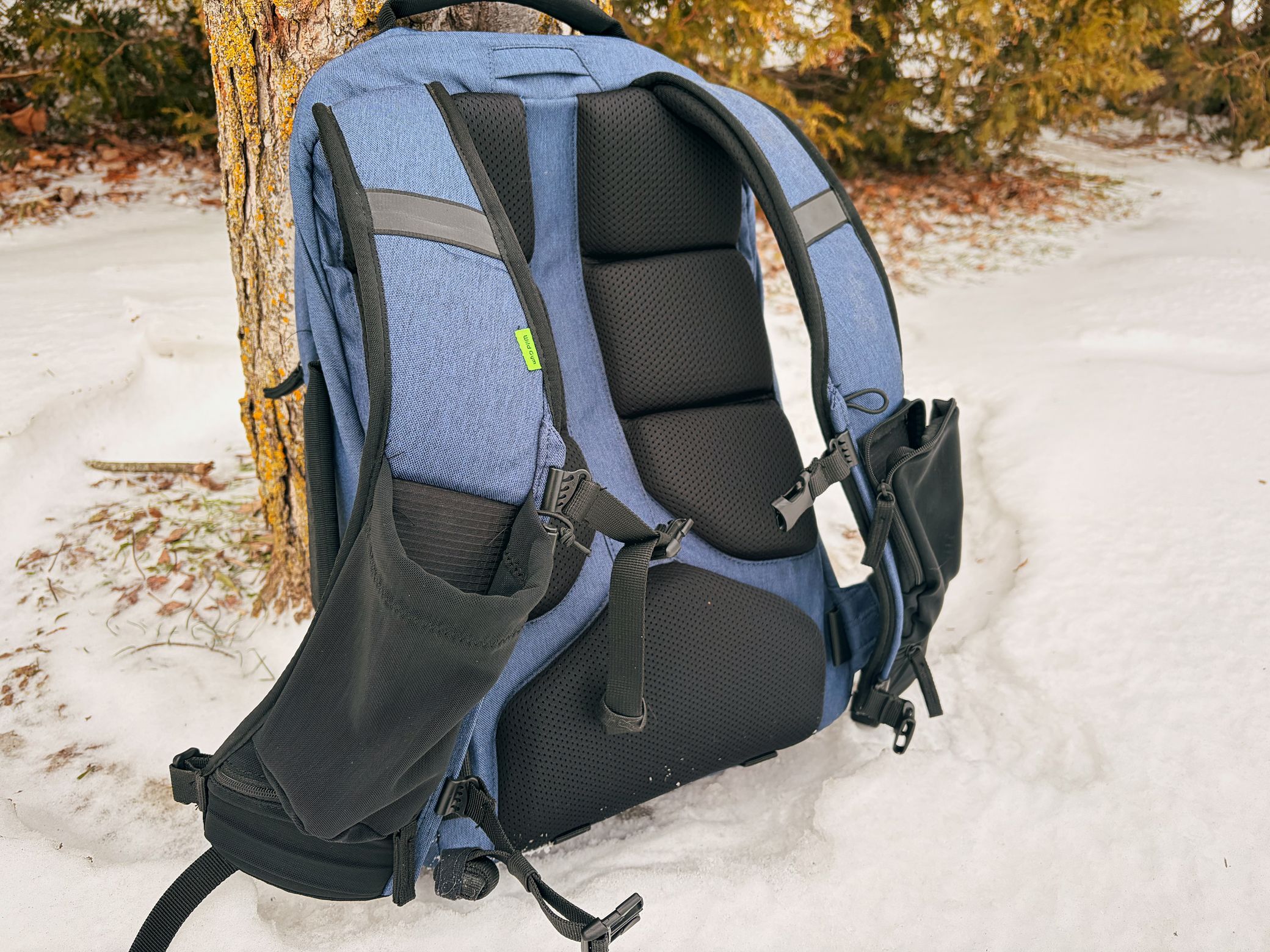
Instead, I went for a product by a company called Wild Gym. It's their "Everyday Ruck" — an overengineered backpack with lots of adjustability and a less military vibe to it. It's got lots of padding, two different straps on the front, a dedicated pocket for the 30lbs weight plate I got with it, and padded handles on the sides so you can use the whole backpack as a weight for squats and such.
The shipping experience was actually not wonderful, and if you're outside of the US I don't recommend buying directly from them.
The backpack itself is very good. A year on it still looks like new. The straps and zippers held up well, as did the mesh pockets on the shoulder straps. I got a bundle that included a hip strap but didn't end up using it — I tried it but it made my back ache.
Using a purpose-built backpack with a weight plate made all the difference in my experience. My shoulders still get tight, but for the most part I'm comfortable. The backpack sits high and tight on my back, and nothing digs into my shoulders or neck. It's quality. It was a few hundred dollars, which seems pricey until I compare it with the cost of a gym membership. Divided by the 100 workouts I used it for, the per-workout cost isn't bad (and will get cheaper as I keep going).
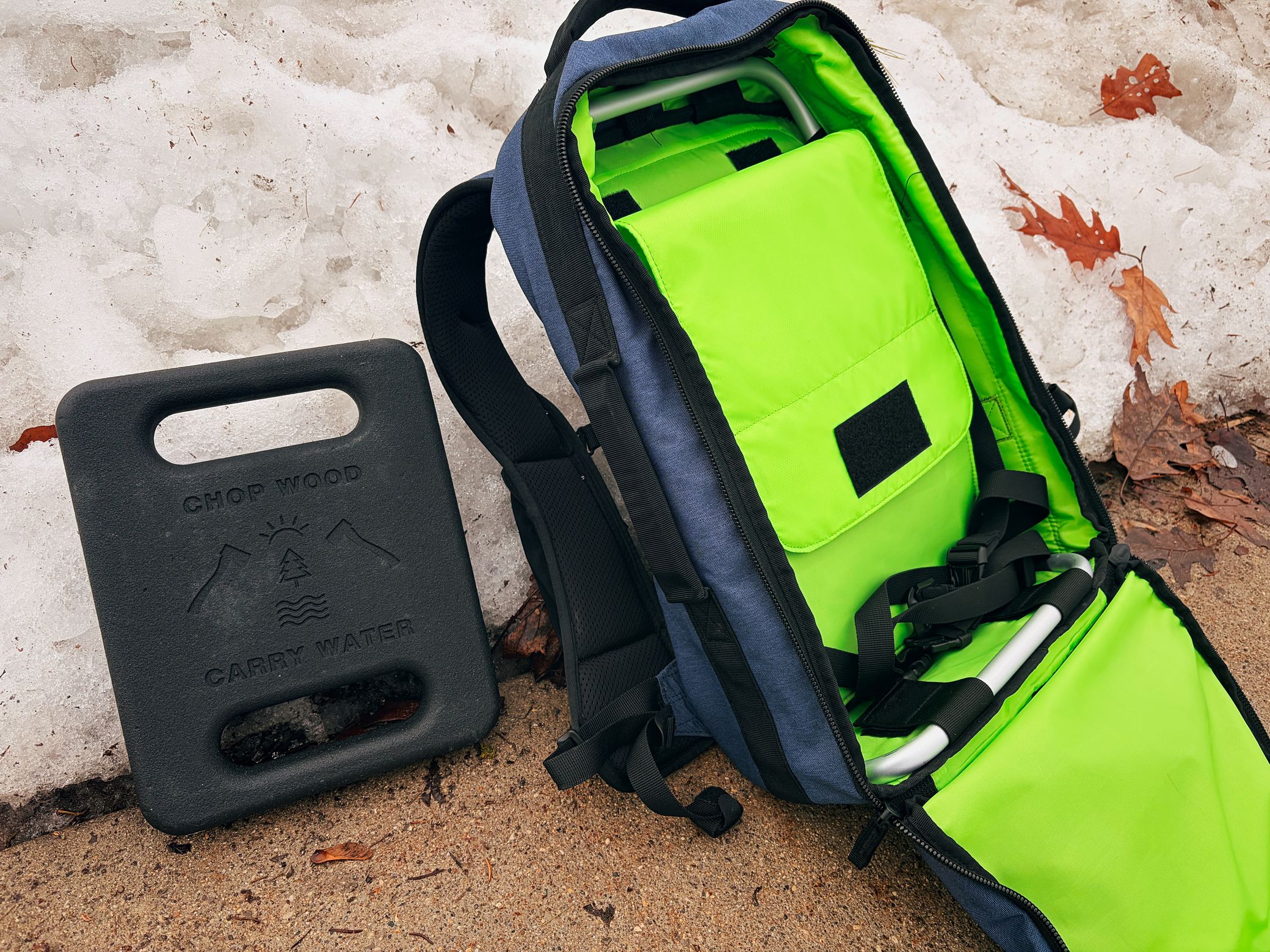
A few months ago Wild Gym came out with a more minimal product that's almost a "plate carrier", but I'm glad I went for a complete backpack. It's a genuinely useful, well-made bag — I can take the weight plate out and pack it for a trip.
The shoes
The very first ZSA Loves post, back in April 2023, was about minimal running shoes, the Merrell Trail Gloves. I still think they're awesome shoes, and I still use "barefoot" minimal footwear for many activities.
Rucking is not one of them.
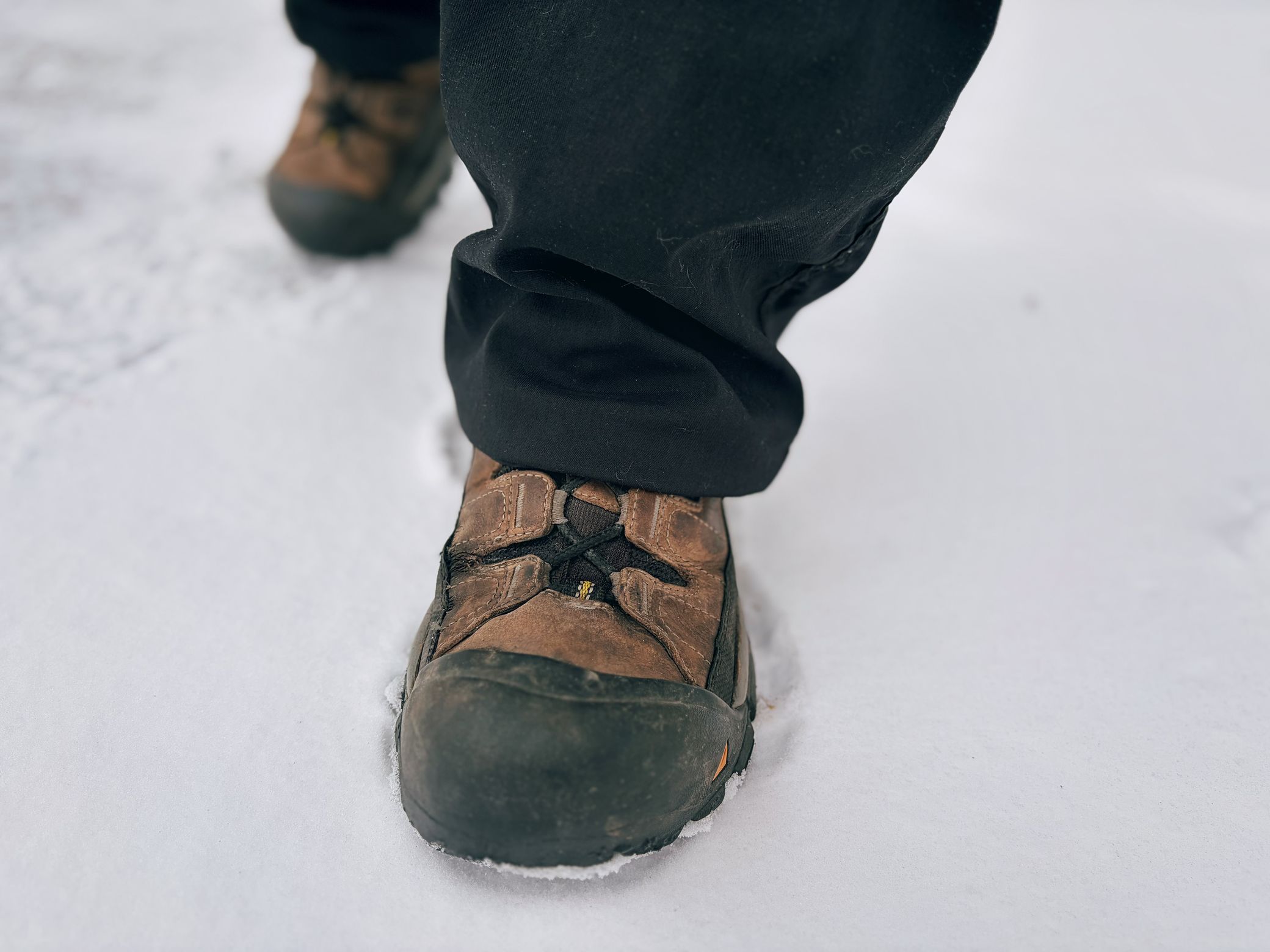
When I walk quickly with a heavy backpack on hard sidewalks and pavement, I do best with a supportive shoe. I ended up using Keen boots that I've had for years. They're warm enough for winter, and they provide lots of ankle support.
Unlike the backpack, these particular shoes are nothing special, but they've been holding up for years. I know GoRuck offer a line of dedicated "all-terrain rucking" shoes. They're probably good, but the main thing I found is that even if you're comfortable with minimal footwear for other activities, you should probably get something more conventionally supportive for rucking.
The app
Garmin recently added a dedicated rucking activity to their watches. Unfortunately, I am not hardcore enough to be rocking a Garmin fitness tracker. I use an Apple Watch, and it looks like Apple hadn't heard of rucking just yet.
If you strap on a heavy backpack and start a "Walking" or "Hiking" activity on an Apple Watch, it will wreak havoc with your Fitness and Health stats. The watch doesn't know you're carrying a heavy load, so it thinks your fitness level went way down. You're walking at a moderate pace but your heart rate looks like you're working hard — is everything okay? Your VO2max will plummet, your training load will get wonky, and so on.
I approach this in two ways. First, and most important: I don't look at the numbers too hard. I just don't take Apple Health seriously for this sort of thing. I mainly want to know how many workouts I did, and it's good enough for that. For the rest, I just try to track what my body feels like over time.
That said, I did get a third-party app for tracking my rucks, and that app is so good it almost deserves its own post. It's called WorkOutDoors. It's a one-time payment, and it is ridiculously customizable. It almost feels like an Android app, nerdy in the best possible way.
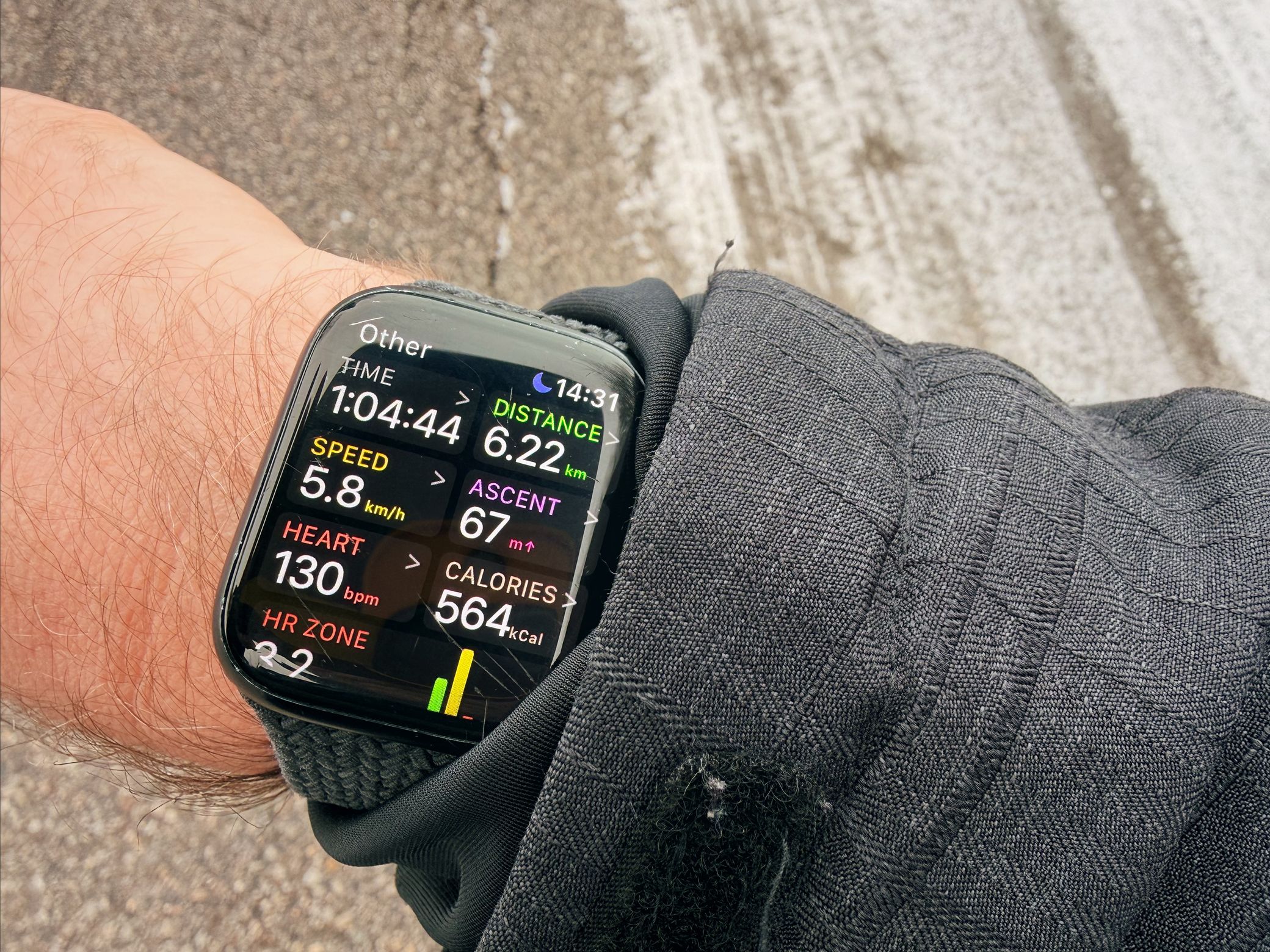
It comes as a phone app with a companion watch app, and you can tweak every single metric on every single screen, choose custom layouts, set up gestures, etc. It shows a little map on your wrist if you want it. It does sync with Apple Health, and I save all of my activities as "Other" so they are easy to filter out should I ever want to.
So many fitness apps are subscription based; there is even a dedicated app for rucking, but I never even tried it because it's a subscription. A one-time payment makes so much more sense, since it all runs on my devices anyway (there are no server costs). So while WorkOutDoors doesn't explicitly track "rucking" as an activity and doesn't ask how heavy my pack is, I still find it superior to the Apple Fitness app.
The surprise
The biggest surprise, for me, was that a dedicated "rucking" backpack did make a difference — enough of a difference for me to be able to keep up this activity for a year and still want to keep going. So yes, there is definitely marketing hype here, but it's not all hype.
The other thing I'm routinely surprised by is that it's not that bad outside. In the summer it's beautiful here, but many winter days are gray and forbidding. Once I'm walking, though, I usually realize that it's actually quite lovely.
If you're looking for a fitness trend that's easy to get started with and keep up, rucking is worth thinking about.